
Rossen Milanov, Music Director
Next Event:
by Robert Colby
In the documentary O, Fortuna, Carl Orff’s third wife, Luise Rinser, reflected upon their visit to Greece in the 1950s when the composer ascended the walls of the Heroic Age site of Mycenae one gloomy day. “This was his world,” she recalled, “a dark world full of shadow.” With its percussive and ritualistic quality, the Trionfo di Afrodite, performed by the Columbus Symphony May 1-2, sounds as if it had come from Orff’s reflections upon those ancient shadows. Was he a man out of time?
Like a stonemason mining a crumbling ruin for building blocks, Orff compiled the libretto of the Trionfo di Afrodite out of parts: mostly a Roman wedding hymn by the poet Catullus and some Greek fragments by Sappho and Euripides. Narrating a marital procession in which the bride and groom advance in ceremonial fashion to their nuptial chamber, the title invokes the ancient Roman convention of the triumph.
When Roman generals vanquished foes, some were granted the honor of parading into the Forum with the spoils, captive rulers, and stolen gods that would add glory and power to Rome. In medieval Italy, triumphal processions served religious ends, sacralizing the city with ambulatory relics and icons of the Virgin. The urban space thus became a site of both spectacle and control, staging a social order with divine sanction. In the fourteenth century, the poet and humanist Francesco Petrarch wrote I Trionfi, where he used the Roman triumph as a motif to parade a moral hierarchy of ascending forces, moving from base passions through chastity, death, fame, time, and eternity. I Trionfi soon became a popular subject for art.
In elaborate Tuscan nuptial pageants, these traditions merged in a curious example of Renaissance art mirroring Renaissance life. In Florence in particular, the marital cortege became a civic ritual to cement patrician alliances, display wealth, and demarcate neighborhood enclaves. Not only was the bride paraded through the streets like a trophy, but luxury goods from the trousseau were held aloft. For very wealthy families, this might include an elaborate wedding chest, or cassone, that could be adorned with painted panels featuring subjects drawn from ancient myth and legend. The horizontal format made them ideal for frieze-like depictions of “triumphs,” completing the cycle between procession and image, as objects showing such pageantry were themselves paraded in the cortege.
One Renaissance cassone panel, the Triumph of Venus, from around 1500 (fig. 1) shows this well. Aphrodite’s Roman cognate, Venus, is enthroned atop her triumphal car dressed in dawn-sky blue. She offers her girdle to a forbidding attendant who further binds the humbled Cupid kneeling at her feet. The subject teaches how sanctioned marriage tranquilizes lust and directs passion toward its proper end: lawful and generative union that brings honor to the family and the city.
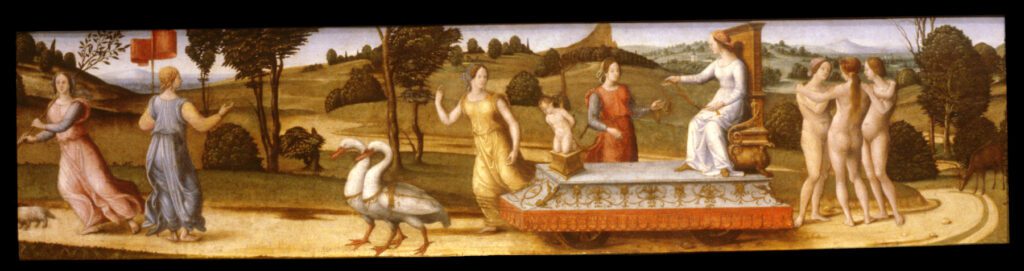
Fig. 1: The Triumph of Venus, style of Francesco Granacci (Italian, 1469-1543), ca. 1500. Tempera and oil on wood panel. The Walters Art Museum.
Along with his choice of an Italian title for Trionfo di Afrodite, Orff adopted the formal convention of the Renaissance marital procession, animated by his Greek and Roman sources. The work follows a sequence ordered to show appropriate sanction for the match—assembly of the wedding party, the arrival of bride and groom, invocation of Hymen, and the celebration of the couple in chorus-like fashion. Yet Orff’s use of such conventions can barely contain the archaic, unrestrained force his music unleashes. The culminating moment—the apparition of Aphrodite—feels less like a they-lived-happily-ever-after resolution than a frenzied Bacchanalian rite. Here, Orff reveals himself to be hardly a man out of time, but instead profoundly of his moment: for what could be more distinctly 20th-century modern than the slipping of the mask of civilization to expose the surging impulses beneath?
An art historian by training, Robert Colby lives in Columbus, Ohio, where he consults with nonprofits on strategy and branding.
Hear Orff’s Triumph of Aphrodite performed at 7:30PM on May 1 and 2 at the Ohio Theatre. Tickets available now.

Music Director Rossen Milanov leads a world premiere and return to Carnegie Hall.
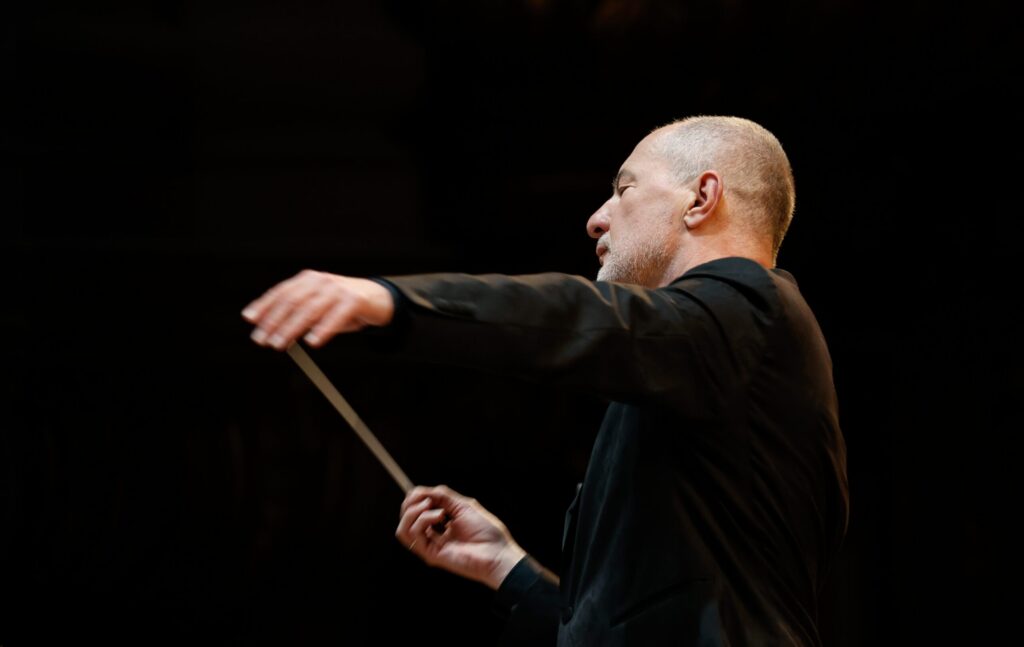
Music Director Rossen Milanov leads a world premiere and return to Carnegie Hall.